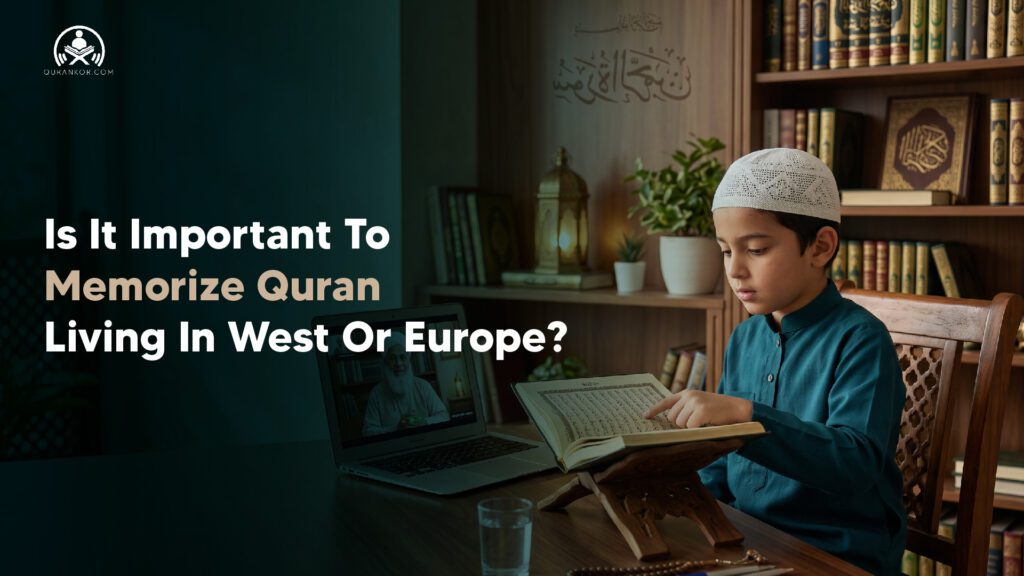
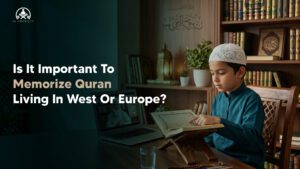
Is it important to memorize complete Quran for someone living in western and European countries?
it is not required or necessary to memorize the complete Quran to live, work, or build a successful life as a Muslim in Western or European countries.
From both an Islamic jurisprudence (Fiqh) standpoint and a practical daily life perspective, living in non-Muslim majority nations does not depend on being a Hafiz (someone who has memorized the entire Quran).
1. What Islam Requires vs. Complete Memorization
In Islamic teachings, memorizing the entire Quran is considered Fard Kifayah (a collective obligation on the Muslim community as a whole). This means if some individuals in a community fulfill it, the rest of the community is exempt from the obligation.
For individual Muslims, the primary requirements regarding the Quran are:
Memorizing Essential Passages: Learning Surah Al-Fatiha and a few short Surahs (such as Surah Al-Ikhlas, Surah Al-Falaq, Surah An-Nas) to perform the daily five prayers (Salah).
Understanding Basic Fardh (Obligations): Knowing core Islamic beliefs, Halal and Haram guidelines, and daily ethics.
Respect and Connection: Reciting and engaging with the Quran regularly according to one’s capacity.
Completing Hifz is a virtuous and deeply rewarded spiritual achievement, but it is Fardh ‘Ayn (an individual duty) for no single Muslim unless they personally choose to undertake that journey.
2. Practical Life in Western & European Countries
In Western and European societies, legal, social, and economic integration relies on standard civic obligations rather than specific religious titles:
Legal & Civic Requirements: Living, working, or studying legally depends on adhering to local laws, securing valid visas/residency, paying taxes, and respecting civic duties.
Education & Career: Professional growth relies on relevant skill sets, academic qualifications, and language proficiency (e.g., English, French, German).
Community Life: Local Islamic centers and mosques across North America, Europe, and Australia are supported by diverse communities. While communities always value qualified Imams and Huffaz to lead prayers, everyday residents—engineers, doctors, teachers, tradespeople, business owners—live fulfilling lives by practicing the core basics of their faith.
What Matters Most for Muslims Living in the West
For Muslim families and individuals residing in or moving to Western countries, the focus generally rests on key practical and spiritual priorities:
Core Islamic Identity: Maintaining daily prayer, eating Halal, and keeping good manners (Akhlaq).
Basic Quranic Literacy: Ensuring children can read Quranic Arabic accurately with Tajweed and understand basic Islamic values.
Local Language Proficiency: Mastering the local language to navigate school, work, and community life smoothly.
Positive Representation: Serving as positive, honest, and contributing members of society.
While memorizing the whole Quran brings immense spiritual blessings, it is entirely optional and not a prerequisite for living or thriving in Western nations.